
The Health Platform for Life Beyond Earth
Scalable and extensively configurable platform to support remote clinical research in remote settings including commercial space missions.



Health Data, Anywhere Humans Venture.
Space missions demand health monitoring in environments with no connectivity and extreme conditions. Existing systems fall short, as they are either built to be cloud native or have limited capability to ingest multi-modal data human, device and environmental data.
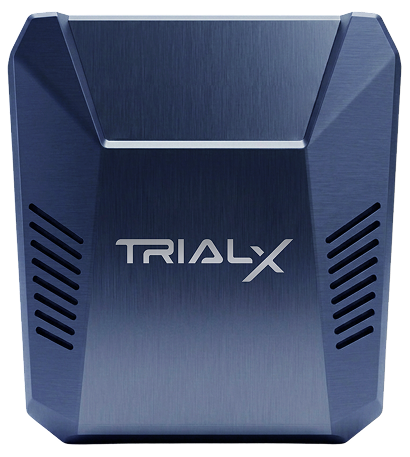
TrialX's Space Health Platform is an industry-first platform built to collect, integrate, and analyze diverse datasets - from wearables to genomics and work completely offline when in space.
We make remote health research possible, as humans become a space faring species.
Commercial Space Flight Timeline
Key Space Health Data Management Capabilities
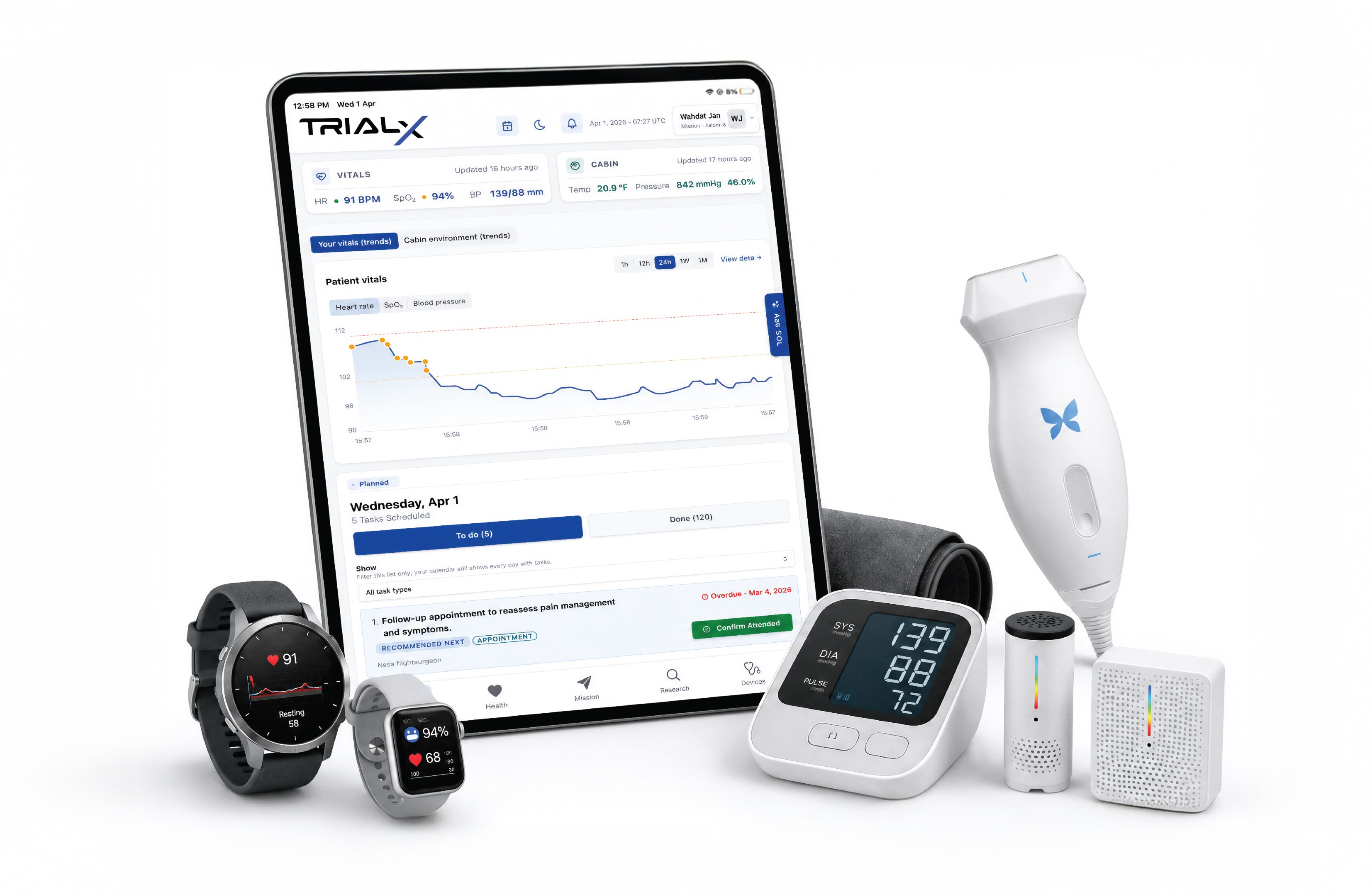
Offline Data Ingestion
Securely collects health data from multiple sources without requiring active connectivity.
Real-Time Monitoring
Enables continuous health tracking, even in remote or space environments.
AI-Assisted Insights
Self hosted Onboard AI analyzes data to suggest procedures, flag risks, and surface insights.
Multi-Device Data Integration
Captures health data from devices like Butterfly iQ+, wearables, sensors, and monitors.
Medical Reporting
Generates structured, shareable reports aligned with clinical and research needs.
Privacy-First Architecture
Keeps all data encrypted and stored locally without cloud dependency even AI models are deployed on the device.
Integrated Surveys
Supports structured, phase-tagged surveys; links to procedures and informs next steps.
Centralized Data Hub
Aggregates physiological, environmental, and experimental data from multiple space missions into a unified, accessible repository.
Seamless Integration with Health Devices
Interfaces with devices like Butterfly iQ+ ultrasound, Garmin wearables, and BioButton for real-time health data capture.
Support for Diverse Data Types
Accommodates surveys, wearable metrics, posture/motion data, diagnostic images, biospecimen analyses, and genomic information.
Remote Data Collection Capability
Enables decentralized data gathering via mobile apps, reducing the need for in-person assessments during space missions.
Cross-Mission Research Opportunities
Facilitates comparative studies by allowing researchers to access and analyze datasets from various space missions.
Integrates with Ap
Collects data through mission-specific apps, incorporating tools like Essential Measures for comprehensive health assessments.
One Platform. Multiple Data Sources
TrialX Space Health Platform supports collection of data from various sources. It integrates input from wearables, surveys, posture sensors, ultrasound devices, flight and environmental systems, ocular tools, clinical records, and genomic data. This setup ensures secure, reliable data access even in remote or low-connectivity environments - bringing all critical information into one unified system.


Data


Records
Data

Data

Measurements
Our Success
commercial
space missions
Number of
Studies
Pointers
Our Success
Number of commercial space missions
Total number of studies
Participants
Data pointers
Astronauts
Latest from TrialX
Blog
July 25th, 2025

Lorem ipsum dolor sit amet consectetur. Lorem tincidunt et vestibulum elementum.
Blog
July 25th, 2025
Lorem ipsum dolor sit amet consectetur. Lorem tincidunt et vestibulum elementum.
One platform. Various ways to connect patients to your clinical studies.




Contact Us
520 White Plains Road Suite 500 Tarrytown, NY 10591
+1 212.537.6944
info@trialx.com
Our Solutions
For Industry
-
Patient Recruitment Management Solutions
-
Mobile Research Solutions
-
Space Health & Research Solutions
-
Online Talkshows
For Patients